
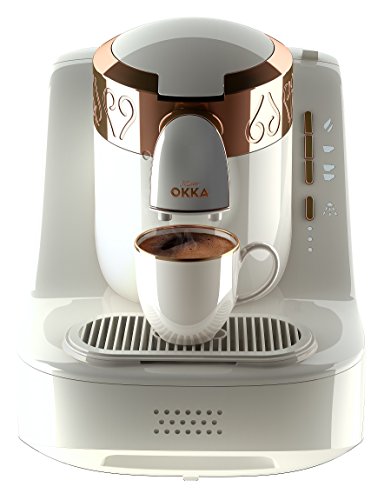
On this page, we shall show the key specifics of greek coffee maker. Making a good choice when going to acquire a greek coffee maker is just not easy, we are happy that you will make use of the information presented here to make a informed choice.
Table of Contents
- 1 What is the best greek coffee maker to buy?
- 2 Best Greek Coffee Maker Reviews
- 3 Offers and Discounts
- 4 Cheap Greek Coffee Maker
- 5 Buy Greek Coffee Maker Online
- 5.1 SAKI Turkish Coffee Maker, 120V, 1 to 4-Cup Brewing Capacity, 100% BPA Free, Ember Function for Perfect Cup of Turkish, Greek Coffee - Black
- 5.2 Beko 2-Cup Turkish/Greek Coffee Maker (Black), 120V, %100 BPA Free
- 5.3 Arabic, Greek, & Turkish Electric Coffee Maker Machine Pot Warmer Kettle Premium Quality Stainless Steel 0.3 L, 4 Cup Capacity Cool Touch Handle Cordless Base (Foldable Handle, Travel Size)
- 5.4 Arzum Okka OK002W 120V Turkish/Greek Coffee Machine, White/Chrome (Silver)
- 5.5 Arzum Okka Minio Automatic Turkish/Greek Coffee Machine, USA 120V UL, Black/Gold
- 5.6 Arzum Okka OK004-K Okka Minio Turkish/Greek Coffee Machine, Compact, Black/Silver
- 5.7 Arzum Okka Automatic Turkish/Greek Coffee Machine, USA 120V UL, Black/Chrome
- 5.8 Arzum Okka Automatic Turkish/Greek Coffee Machine, USA 120V, UL, White/Silver
- 5.9 DEMMEX 4 Pieces 18/10 Stainless Steel Turkish Greek Arabic Coffee Pot Stovetop Coffee Maker Cezve Ibrik Briki Set, 6-10-15 Ounces
- 5.10 DEDE Copper- 2020 -PCZ Series (Large-14fl.oz)-Thickest Solid Copper Stamped and Hammered Turkish Greek Arabic Coffee Pot with Wooden Handle, Stovetop Coffee Maker Cezve Jezve Jazva Ibrik Briki (Matte)
- 6 Best Greek Coffee Maker 2025
What is the best greek coffee maker to buy?

This is the best selected item of other clients acquiring products related to greek coffee maker. For additional possibilities, have a look at our full selection of Greek Coffee Maker or use the search box.

Many individuals used the greek coffee maker before, so you can take advantage of what they have to say regarding it. Keep reading to see the very best seller products and what the other people have to state about using them.
Best Greek Coffee Maker Reviews
Have a look at these items to learn more about greek coffee maker and then make a well informed selection.
- ☕️ Cook-Sense Technology: SAKI Turkish Coffee Maker engineered to bring pro barista brewing technology to your home. With cook-sense technology, you do not have to stand in front of the Turkish coffee maker to avoid overflowing. Highly improved sensors shut off the machine automatically when your Turkish coffee foam reaches a perfect level—Lord of the foams SAKI Turkish Coffee Machine.
- ☕️ Ember Cooking Function: Compared to other Turkish Coffee Makers on the market SAKI Turkish Coffee Maker comes with a unique feature that differs from others. SAKI Turkish Coffee Machine is the first product in the market with Ember Cooking Function to double foams and gives the same taste experience of brewing on sand or ember.
- ☕️ Easy to Use: Drink the perfect cup of Turkish coffee with only one button. Put the amount of water into the Turkish coffee pot, then add Turkish coffee to the coffee pot using SAKI measuring spoon. Stir the coffee pot for perfect foam. Select the person button and press it. In about 2-3 minutes, your perfect cup of Turkish coffee is ready to serve. Enjoy at every sip.
- ☕️ 4-Cups Capacity: SAKI Turkish Coffee Machine has two capacity selection modes. 1-2 People and 3-4 People selections. Cups selection features allow you to make a perfect cup of Turkish coffee for yourself and your loved ones at ease.
- ☕️ 2 Years Replacement Warranty: We pride ourselves on being buyer-friendly, which is why a 100% replacement warranty covers each Turkish coffee maker. Contact us for any concerns or issues; our experts thrive on helping with any problem.
- ☕ Foamy authentic Turkish Coffee taste thanks to Cooksense Technology
- 🔌 This machine is designed for US outlets (120V)
- 🎵 Audible warning when it s ready to sip
- ⏳ One touch simple coffee cooking in less than 3 mins
- 🧽 Easy pot cleaning
- ☕️ Cook-Sense Technology: SAKI Turkish Coffee Maker engineered to bring pro barista brewing technology to your home. With cook-sense technology, you do not have to stand in front of the Turkish coffee maker to avoid overflowing. Highly improved sensors shut off the machine automatically when your Turkish coffee foam reaches a perfect level—Lord of the foams SAKI Turkish Coffee Machine.
- ☕️ Ember Cooking Function: Compared to other Turkish Coffee Makers on the market SAKI Turkish Coffee Maker comes with a unique feature that differs from others. SAKI Turkish Coffee Machine is the first product in the market with Ember Cooking Function to double foams and gives the same taste experience of brewing on sand or ember.
- ☕️ Easy to Use: Drink the perfect cup of Turkish coffee with only one button. Put the amount of water into the Turkish coffee pot, then add Turkish coffee to the coffee pot using SAKI measuring spoon. Stir the coffee pot for perfect foam. Select the person button and press it. In about 2-3 minutes, your perfect cup of Turkish coffee is ready to serve. Enjoy at every sip.
- ☕️ 4-Cups Capacity: SAKI Turkish Coffee Machine has two capacity selection modes. 1-2 People and 3-4 People selections. Cups selection features allow you to make a perfect cup of Turkish coffee for yourself and your loved ones at ease.
- ☕️ 2 Years Replacement Warranty: We pride ourselves on being buyer-friendly, which is why a 100% replacement warranty covers each Turkish coffee maker. Contact us for any concerns or issues; our experts thrive on helping with any problem.
- ☕ Foamy authentic Turkish Coffee taste thanks to Cooksense Technology
- 🔌 This machine is designed for US outlets (120V)
- 🎵 Audible warning when it s ready to sip
- ⏳ One touch simple coffee cooking in less than 3 mins
- 🧽 Easy pot cleaning

Offers and Discounts
If you are looking for cheap Greek Coffee Maker, here we will post any offer that we find:
If there are no available offers right now, bookmark this page and come back in a couple of days. Price and availability may change quickly.
Cheap Greek Coffee Maker
The cheapest options among the top 10:
Buy Greek Coffee Maker Online
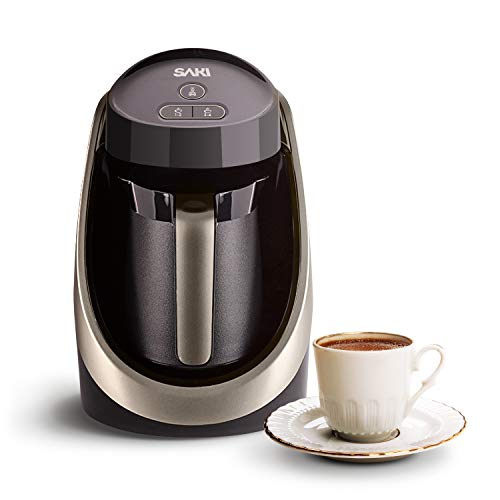
SAKI Turkish Coffee Maker, 120V, 1 to 4-Cup Brewing Capacity, 100% BPA Free, Ember Function for Perfect Cup of Turkish, Greek Coffee - Black
- ☕️ Cook-Sense Technology: SAKI Turkish Coffee Maker engineered to bring pro barista brewing technology to your home. With cook-sense technology, you do not have to stand in front of the Turkish coffee maker to avoid overflowing. Highly improved sensors shut off the machine automatically when your Turkish coffee foam reaches a perfect level—Lord of the foams SAKI Turkish Coffee Machine.
- ☕️ Ember Cooking Function: Compared to other Turkish Coffee Makers on the market SAKI Turkish Coffee Maker comes with a unique feature that differs from others. SAKI Turkish Coffee Machine is the first product in the market with Ember Cooking Function to double foams and gives the same taste experience of brewing on sand or ember.
- ☕️ Easy to Use: Drink the perfect cup of Turkish coffee with only one button. Put the amount of water into the Turkish coffee pot, then add Turkish coffee to the coffee pot using SAKI measuring spoon. Stir the coffee pot for perfect foam. Select the person button and press it. In about 2-3 minutes, your perfect cup of Turkish coffee is ready to serve. Enjoy at every sip.
- ☕️ 4-Cups Capacity: SAKI Turkish Coffee Machine has two capacity selection modes. 1-2 People and 3-4 People selections. Cups selection features allow you to make a perfect cup of Turkish coffee for yourself and your loved ones at ease.
- ☕️ 2 Years Replacement Warranty: We pride ourselves on being buyer-friendly, which is why a 100% replacement warranty covers each Turkish coffee maker. Contact us for any concerns or issues; our experts thrive on helping with any problem.
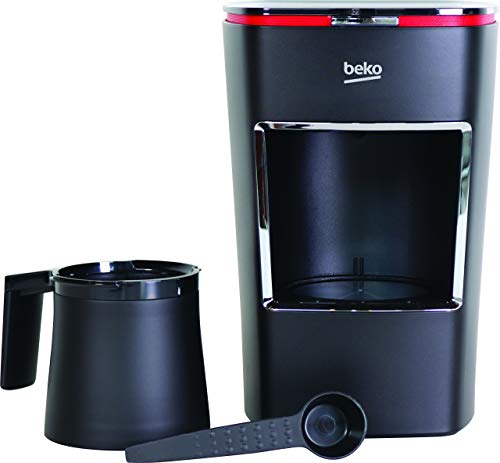
Beko 2-Cup Turkish/Greek Coffee Maker (Black), 120V, %100 BPA Free
- ☕ Foamy authentic Turkish Coffee taste thanks to Cooksense Technology
- 🔌 This machine is designed for US outlets (120V)
- 🎵 Audible warning when it's ready to sip
- ⏳ One touch simple coffee cooking in less than 3 mins
- 🧽 Easy pot cleaning

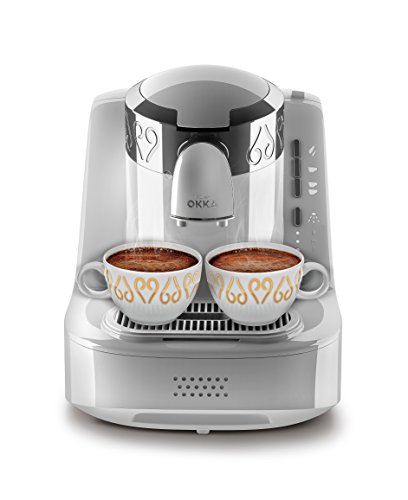
Arzum Okka OK002W 120V Turkish/Greek Coffee Machine, White/Chrome (Silver)
- Automatic Turkish/Greek Coffee machine
- Automatically brews and pours coffee directly into the cup(s)
- Self-cleaning function
- Slow brewing function
- Included components: Quick Start Guide

Arzum Okka Minio Automatic Turkish/Greek Coffee Machine, USA 120V UL, Black/Gold
- 1-4 cups capacity
- Smart overflow prevention system
- Washable pot
- Ideal brewing at low heat
- Sound alert system
- Ideal Turkish coffee in minutes
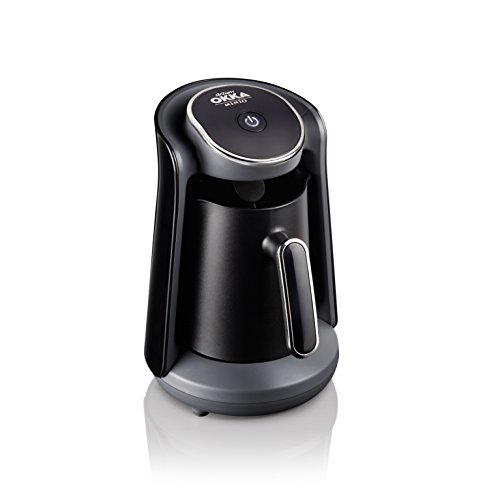
Arzum Okka OK004-K Okka Minio Turkish/Greek Coffee Machine, Compact, Black/Silver
- 1-4 cups capacity
- Smart overflow prevention system
- Washable pot
- Ideal brewing at low heat
- Sound alert system
- Ideal Turkish coffee in minutes
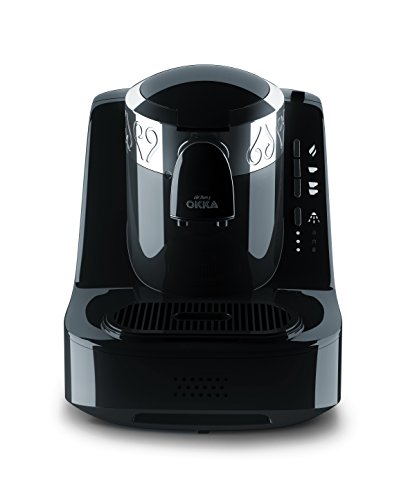
Arzum Okka Automatic Turkish/Greek Coffee Machine, USA 120V UL, Black/Chrome
- Automatic Turkish/Greek Coffee machine
- Automatically brews and pours Coffee directly into the cup(s)
- Self-cleaning function
- Slow brewing function
- Different cup-size selection
- Can make 1 or 2-cup of Turkish coffee at a time
Arzum Okka Automatic Turkish/Greek Coffee Machine, USA 120V, UL, White/Silver
- AUTOMATICALLY brews upto 2 cups of Turkish/Greek coffee at a time and pours directly into the cup(s)
- AUTO ALTITUDE DETECTION system ensures ideal brewing at any geographical location
- UL-Approved
- CUP-SIZE SELECTION
- SLOW-BREW Function for extra extraction of coffee flavours
- SELF-CLEANING

DEMMEX 4 Pieces 18/10 Stainless Steel Turkish Greek Arabic Coffee Pot Stovetop Coffee Maker Cezve Ibrik Briki Set, 6-10-15 Ounces
- 4 Pieces Turkish Coffee Pot, Butter Milk Warmer Set with Hanger.
- 1st Pot : XS - 6 Oz for 2 X Demitasse(2Oz) Cups of Turkish Coffee.
- 2nd Pot : S-M - 10 Oz for 3-4 X Demitasse Cups(2Oz) of Turkish Coffee.
- 3rd Pot : M-L - 15 Oz for 5-6 X Demitasse Cups(2Oz) of Turkish Coffee.
- Material : 18/10 - 304 Quality Stainless Steel. Heat Resistant Handles. Dishwasher Safe.

DEDE Copper- 2020 -PCZ Series (Large-14fl.oz)-Thickest Solid Copper Stamped and Hammered Turkish Greek Arabic Coffee Pot with Wooden Handle, Stovetop Coffee Maker Cezve Jezve Jazva Ibrik Briki (Matte)
- RETRO STYLE: Our PCZ Series Cezve/Ibrik (copper coffee pot) is made of a single sheet of copper. It is designed to make a perfect more cup of Greek/Turkish/Arabian Coffee. It is a combination of retro style and modern design, so it will perfectly fit any design of the kitchen.
- HAND MADE: All production steps by experienced craftsmen are completely hand made. This cezve's body is completely solid hand stamped copper, bottom of cezve is hammered copper, and nonreactive tin linings on the inside. It has a hand made wooden handle that can be easily detachable.
- MAXIMUM DURABILITY: The PCZ Series cezve is made of the thickest copper. It has premium cast solid bronze handle connection for maximum durability. This cezve/ibrik (copper coffee pot) is very convenient in use, does not require special care. You can be assured this will last for many generations unlike other thin imitations found on Amazon. It is better to follow the instructions for longer life.
- USAGE AREA: You can use it in ceramic, electric, and gas stove top hobs. You can also easily use it in hot sand, which is very popular in recent days. Contrary to other which has metal/cast handle, when using this coffee pot with a wooden handle, your hand is not affected by heat. Convenient spout helps pour liquids easily.
- It has fingerprint resistant structure. The engraved motifs on this product are more pronounced than the bright copper model. The All-New PCZ Series cezve/ibrik was produced in Turkey by craftsmen with a century of experience in copper industry at DEDE Copper factory. You will find the DEDE Copper touchmark on the bottom of every handcrafted DEDE Copper piece.
After seeing the best Greek Coffee Maker 2024 lets look into the future:
Best Greek Coffee Maker 2025
These are the new Greek Coffee Maker releases available. Will the best Greek Coffee Maker 2025 be among them?
Related Products:
- Greek Coffee Cups
- Greek Coffee
- Greek Coffee Pot
- Combo Coffee Maker With Kcup Maker
- Coffee Maker
- Compact Coffee Maker
- Toaster Coffee Maker Combo
- Coffee Maker Thermal Carafe
- Cuisinart Keurig Coffee Maker
- 2 In 1 Coffee Maker
- Bodum Iced Coffee Maker
- Breville Grind And Brew Coffee Maker
- 2 Cup Coffee Maker
- Keurig Single Cup Coffee Maker
- Coffee Maker Mug
Last update 2021-01-05. Price and product availability may change.